
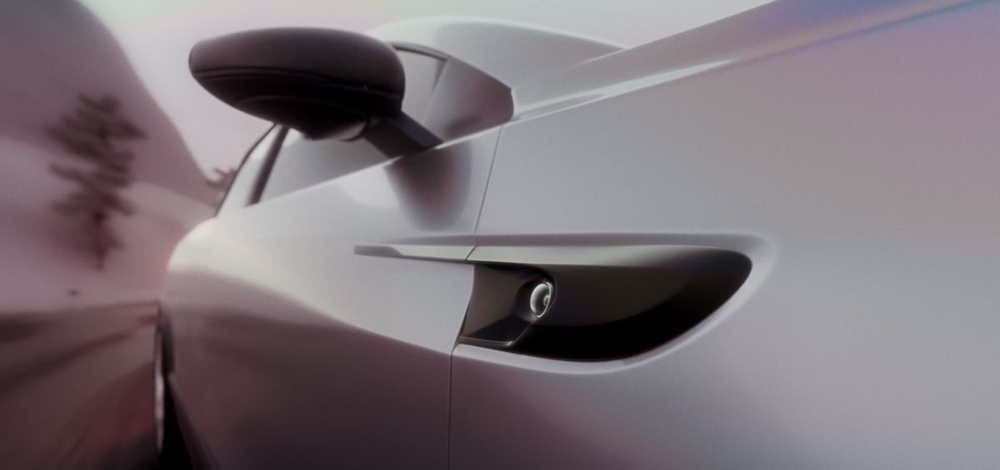

Today's advanced driver assistance systems (ADAS) have evolved in leaps and bounds, and more drivers are beginning to get a taste of autonomous driving. But it can be easy to forget that much of the driver assist technology Mobileye provides begins with a camera.
While Mobileye products are integrated with Lidar and radar as part of a comprehensive sensing system, its camera-first approach is the foundation for scalable driver-assistance and autonomous capabilities.
We dive into three reasons why Mobileye's camera-first approach is foundational to robust and scalable driver-assistance and autonomous technology and its many use cases.
1. Camera sensors mimic human vision in ADAS systems
Road infrastructure is inherently designed for the human eye. We're the ones driving after all. Automotive cameras are designed to capture objects like traffic lights, road signs, lane markings, and road users, all visual information that cameras are uniquely positioned to capture and interpret, complementing what lidar and radar sensors provide.
In fact, with as little as a single forward-facing camera and optimized architecture, a vehicle can support ADAS features such as lane departure, front pedestrian detection and even meet core safety requirements.
Multiple camera configurations go a step further, designed to support heightened detection and form the basis of a broader automotive perception system capable of detecting surrounding cyclists, pedestrians, and merging vehicles.
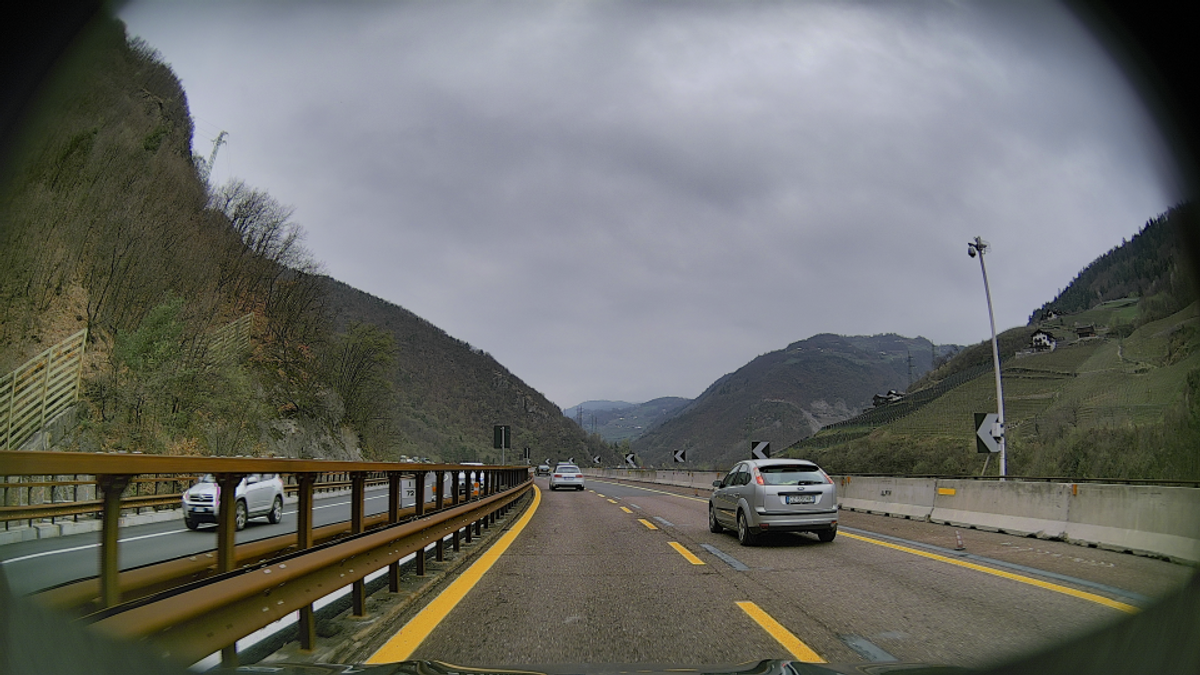
Mobileye platforms support different camera setups, from a single forward-facing camera in basic driver assistance systems to multi-camera surround systems in more advanced platforms. A typical surround setup includes a high-resolution front camera that looks ahead, along with additional cameras placed around the vehicle. Together, these cameras help support highway driving, blind-spot monitoring, lane changes, and low-speed maneuvers such as parking.
2. Cameras are affordable and suited for mass scale production
The car production industry can be costly. Cameras are cost-effective sensors to produce, especially compared with other types of sensors, making them well suited for mass production.
With cameras, it is a relatively simpler way to achieve high-level deployment across millions of vehicles, even when including multi-camera configurations like Mobileye Surround ADAS™ and SuperVision™, or even full autonomous multi-sensor systems like Chauffeur™ and Drive™.
By adding additional cameras and the needed compute, automakers can scale capability across vehicle segments while maintaining a cost structure suitable for mass-market vehicles.
3. Vision-first perception creates a strong system foundation efficiently
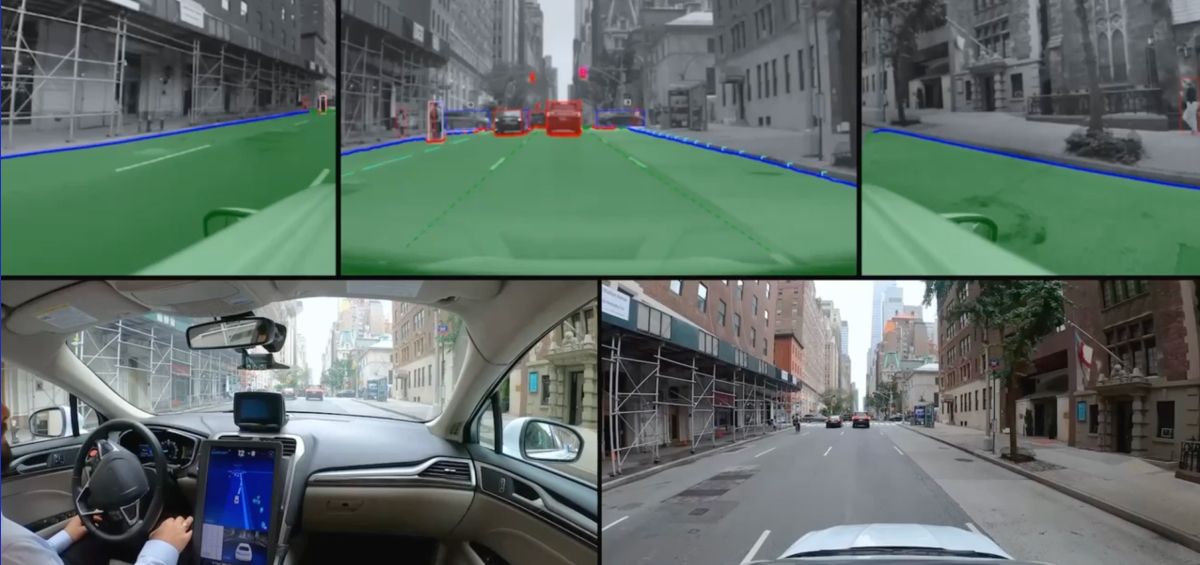
Advanced driver-assistance technology requires an extensive technology stack. But an important question is how to build those capabilities in the most effective and efficient way. Mobileye designs its systems so that vision sits at the center of how the vehicle understands the road.
Cameras capture the driving environment, and AI-based perception systems interpret that visual data to identify vehicles, pedestrians, lane markings, traffic signals, and other critical road elements, creating a rich understanding of the driving scene. Combined with advanced AI, the system can reconstruct three-dimensional depth using cameras positioned around the vehicle, even when those cameras are not configured as traditional stereoscopic pairs.
Once the scene is understood, other parts of the system, such as mapping, driving decisions, and safety models, use that information to help guide safe and intelligent driving.
Real-world experience above all
What transforms raw visual input into a coherent understanding of the driving environment is Mobileye's proprietary Mobileye’s EyeQ™ system-on-chip
But in the end, scalable driver-assistance systems begin with perception. By placing vision at the center of the system, Mobileye’s camera-first architecture provides a practical path from basic safety features to increasingly capable automated driving.


