
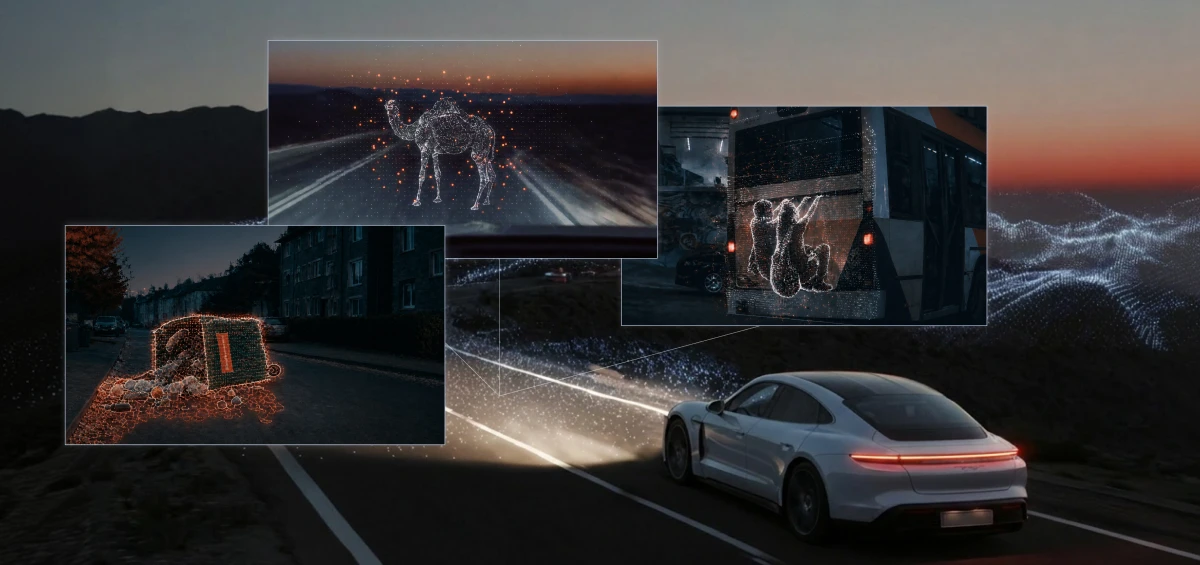

As self-driving cars begin to deploy worldwide, the limits of their current performance have also come into greater focus. Recent weeks have highlighted several new examples of AV limitations in unusual or uncertain scenarios, what AV developers often refer to as the "long tail," a term from statistics describing hard-to-model edge cases. Solving the challenges embedded in the long tail will be the difference between highly geofenced, tightly limited robotaxi deployments and widely adaptable self-driving with broad societal benefits.
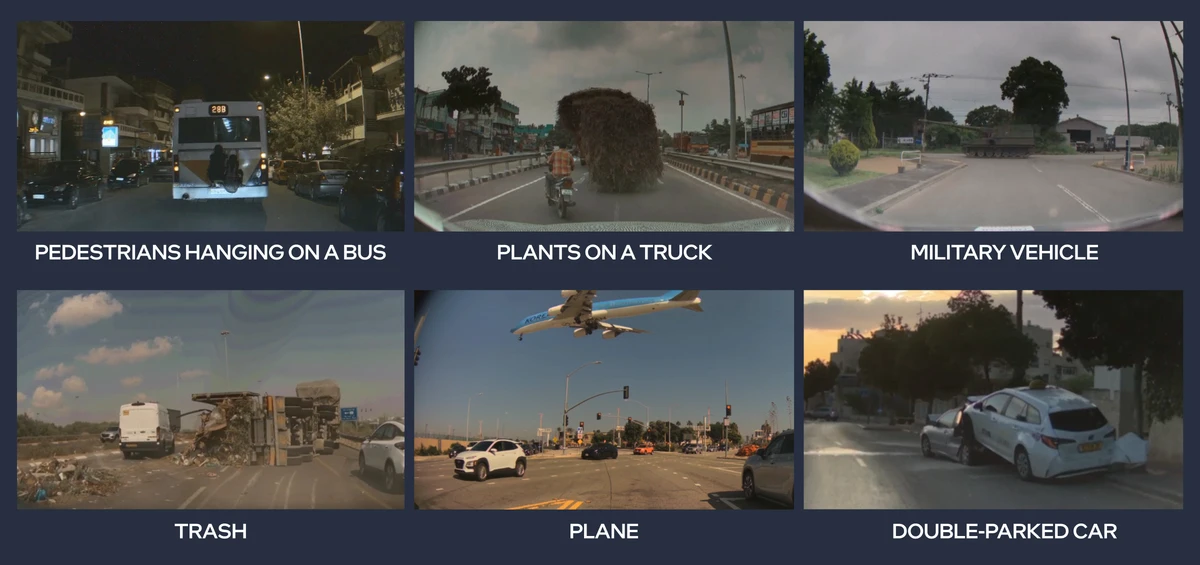 Examples of unusual and rare driving scenarios that AVs need to navigate
These are the defining challenges of Physical AI, where machines must operate safely in environments with effectively infinite variation. Human driving environments are mostly routine, but the small percentage of unusual events is exactly where intelligence and safety are tested most critically, and where the cost of a mistake can be too high.
For those interested in the scientific foundations behind Mobileye's approach, Prof. Amnon Shashua and Prof. Shai Shalev-Shwartz have published two accompanying research blogs: one, exploring the mathematical structure of the long tail in autonomous driving, and one detailing the AI methodology underpinning Meteor and Genario, two important technology engines unveiled here today.
Our approach reflects a key learning from our experience developing driver-assist and self-driving technologies: more data is necessary, but not sufficient. Most driving data contains ordinary driving behavior, lane following, traffic lights and predictable traffic flow. Simply collecting more data and scaling compute will lead to diminishing returns when AVs need ever-improving performance on rare edge cases, where ultra-low error rates are required by definition.
The industry needs a smarter way to scale - systems that are designed to identify the failures that matter most, understand why they matter, and systematically train against them.
Built on more than 25 years of deployment experience across over 230 million vehicles worldwide, and informed by one of the world's largest driving datasets, including daily uploads from more than 8 million vehicles, Mobileye has spent years developing the architecture and validation systems designed for the realities of autonomous driving. As part of that ongoing effort, we have built two proprietary AI tools that represent the next evolution of that work: Meteor, a hypothesis-driven data mining engine, and Genario, a targeted scenario simulator - designed to systematically tackle the long tail problem. Together, they are designed to systematically tackle the long tail problem and further enable scalable AV deployments globally.
Meteor: turning rare failures into automated structured learning
Most autonomous driving systems still treat failures as isolated clips buried inside enormous datasets. The challenge is not only finding failures, but determining which ones represent meaningful, reproducible weaknesses the system can systematically improve.
Meteor is Mobileye's multi-agent AI data analyst for autonomous driving. Operating across millions of hours of driving data collected across different countries, weather conditions, road types, and traffic environments, Meteor is designed to process and analyze video at scale using advanced vision-language model (VLM) embeddings and automated reasoning workflows.
Meteor's goal is not to chase "black swan" events, the essentially unrepeatable combinations of rare conditions that cannot realistically be trained against. Instead, Meteor searches for reproducible failures: recurring situations where the system may systematically struggle, such as partially occluded pedestrians, ambiguous road users, or unusual interactions in dense traffic.
The system is intended to automatically act like an AI data scientist. It is designed to identify failures, to generate hypotheses for why they occurred, and to create semantic queries to search for broader classes of similar scenarios across the dataset. Meteor then retrieves additional examples to test those hypotheses and determine whether a genuine systematic weakness exists. Once validated, it automatically surfaces high-value training examples that can be used to improve model performance on those groups of edge cases.
What makes Meteor unique is that this entire workflow, from failure discovery to hypothesis generation, scenario retrieval, validation, and training data creation, happens automatically and at massive scale. This approach builds on Mobileye's broader Compound AI architecture, where end-to-end AI models are leveraged as components within a system designed for transparency, validation, and scalable safety. Instead of waiting for rare failures to randomly reappear across billions of miles of driving, Mobileye can systematically identify meaningful learning gaps and rapidly improve performance where it matters most.
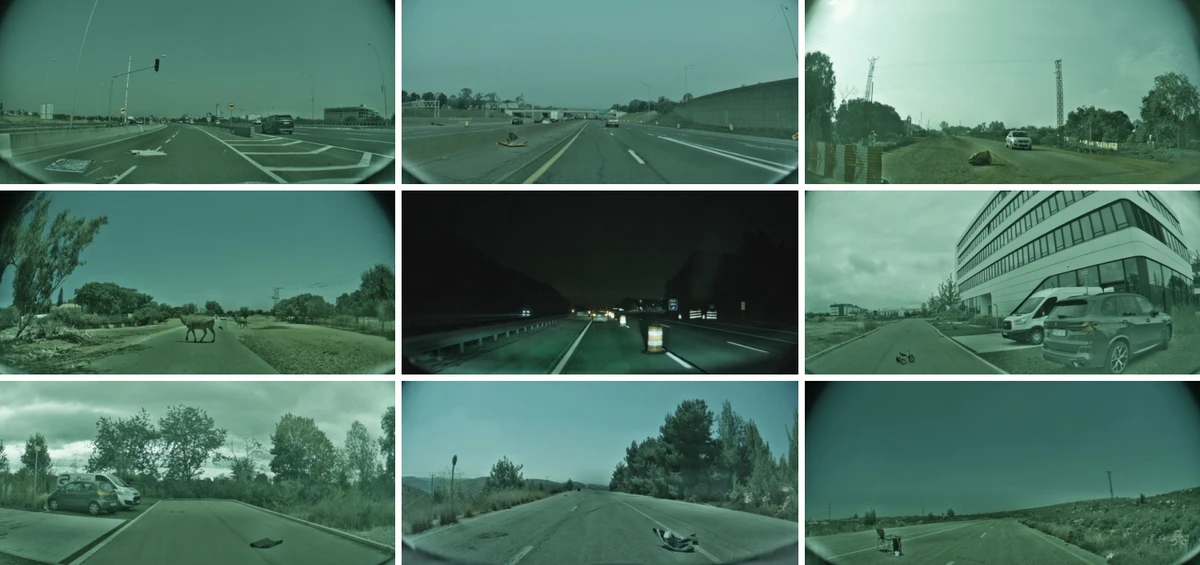
Step 1: Failure discovery & hypothesis
Meteor automatically analyzes millions of hours of driving data to identify reproducible failures, like the undetected hazards as shown here. It then generates a hypothesis: the model appears to under-rank small, low-profile, or visually ambiguous obstacles when they blend into the roadway, appear at long range, or lack strong semantic priors. Detection confidence decreases for hazards with unusual shapes, low contrast, partial visibility, or unexpected placement within the driving path.
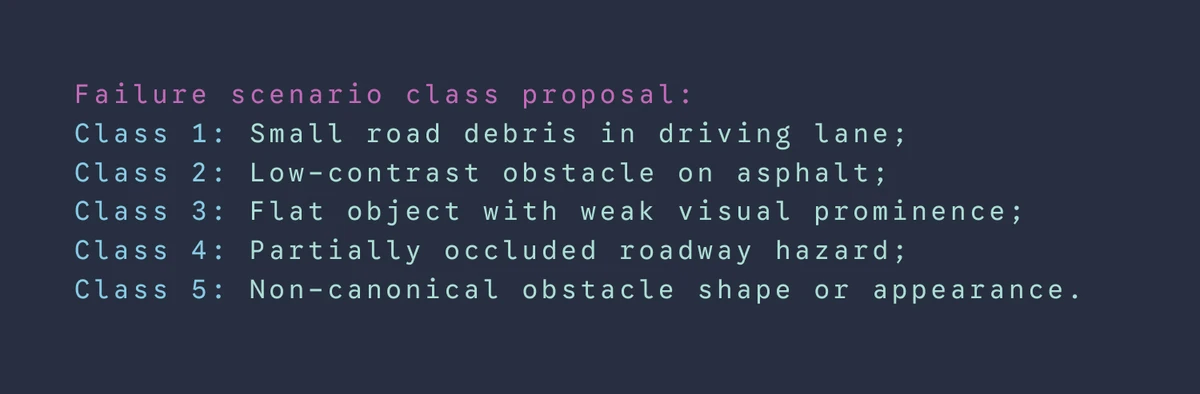
Step 2: Hypothesis-driven scenario querying
Meteor generates semantic queries to identify broader classes of scenarios that can validate or challenge the proposed failure hypothesis.

Step 3: Validating and scaling the learning signal
If the retrieved scenarios validate the proposed failure hypothesis, Meteor automatically identifies and retrieves representative edge cases from across the dataset that can be used to systematically improve model performance through targeted training.
Extending reality with generative AI: meet Genario
Once a meaningful failure pattern is identified, the next challenge is scale. Real-world edge cases are rare, and even when discovered, they may only exist in a handful of examples. Genario is designed to address this by generating targeted training data based directly on findings from Meteor – the specific failure, its root cause, and the conditions that trigger it.
The simulator recreates failures as fully synthetic, photo-realistic driving scenarios that can then be expanded across numerous controlled variations. A single scenario can be transformed across daylight and darkness, rain and snow, glare and fog, changing road layouts, obstacle positioning, and visibility conditions. Small modifications can create entirely new perception and planning challenges.
Generating new edge cases with Genario
Using the validated failure pattern identified by Meteor, Genario automatically creates new synthetic driving scenarios by reproducing obstacles across different shapes, sizes, positions, and roadway contexts to expand targeted training coverage.
Expanding across environmental conditions
Genario then systematically varies lighting, weather, and visibility conditions, including rain, snow, glare, darkness, and fog, allowing autonomous driving systems to train against far broader combinations of realistic edge cases at scale.
The goal is not to replace real-world driving data, but to extend it, especially in the long tail where reality alone cannot provide enough coverage quickly enough. This allows us to proactively stress-test systems against far broader combinations of rare but meaningful events while maintaining tight control over the conditions being explored.
Scaling autonomous driving beyond data
The industry has proven it can collect enormous amounts of driving data, but the next breakthrough is learning how to extract the most meaningful learning opportunities from that data and amplify them intelligently.
That is why we built Meteor and Genario, as part of a broader suite of AI tools for autonomous vehicle development designed to systematically tackle the long tail. These systems represent Mobileye's latest step in evolving how autonomous driving systems are developed and validated, leveraging advances in AI while remaining grounded in architectures built for scalable deployment and safety.
As autonomous driving scales globally, AI-driven solutions that can finally solve long-tail challenges will become essential tools. We believe progress will come not just from scaling data and compute, but from scaling intelligence in how edge cases are discovered, understood, and solved.
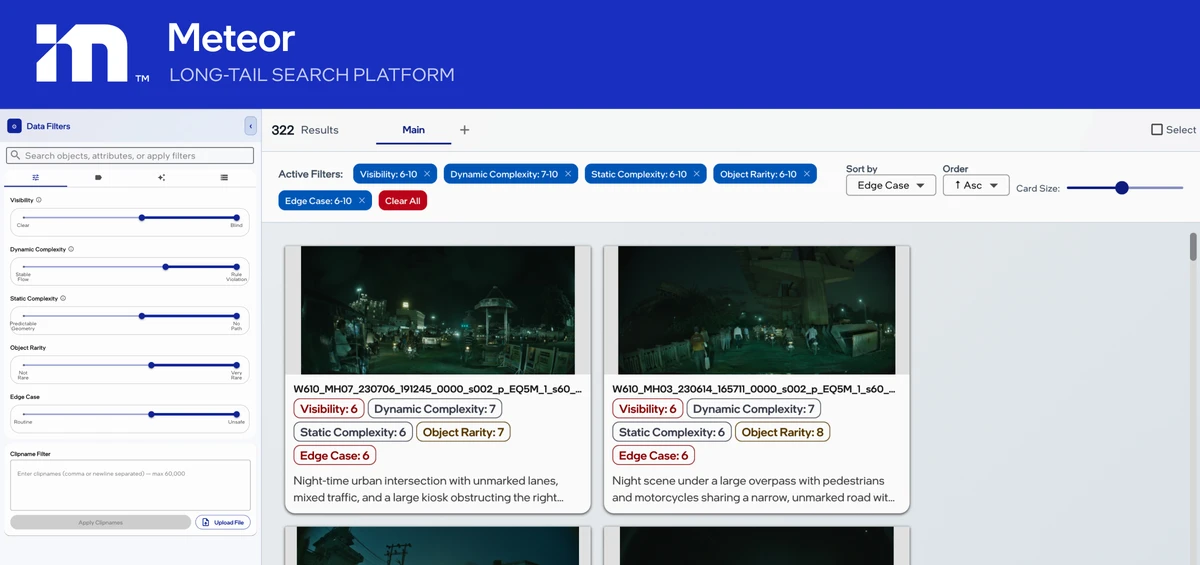 Meteor interface


