
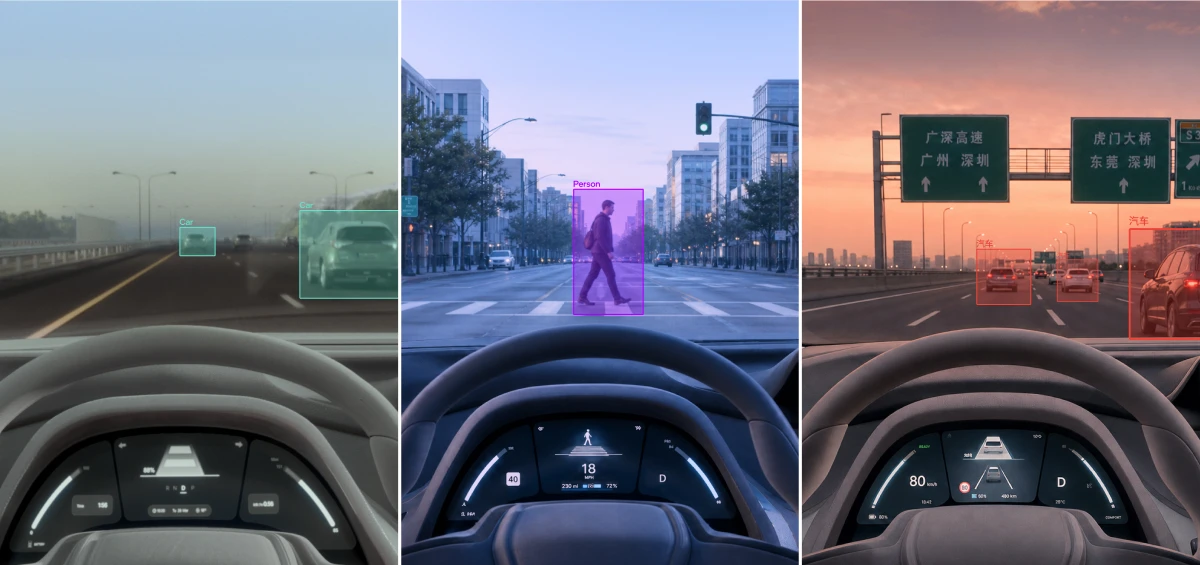

Advanced driver assistance systems continue to evolve, with ADAS regulations in 2026 becoming a defining force in how new vehicle platforms are designed and deployed. What was once a mix of voluntary guidelines is now taking shape as structured, enforceable policy across major markets.
Here is a quick look at the most important regulatory developments shaping ADAS deployment in 2026 and beyond.
The second wave of GSR takes effect in Europe
Europe remains one of the most structured regulatory environments for vehicle safety technology. The General Safety Regulation (GSR) introduced a broad set of mandatory safety systems across new vehicles sold in the European Union.
The initial phase applied primarily to new vehicle types, with requirements extended in July 2024 to cover all new vehicles sold in the EU, including existing models. Additional requirements are expected to take effect in July 2026.These requirements include technologies such as autonomous emergency braking (AEB), intelligent speed assistance (ISA), driver drowsiness and attention monitoring and Advanced Driver Distraction Warning.
For automakers, this means that driver assistance capabilities are no longer optional features. They are becoming baseline safety infrastructure across the European vehicle market.
Because many global platforms are developed with European homologation in mind, these regulations often influence vehicle architecture well beyond the EU.
Platforms that consolidate these functions, rather than treating each mandate as a separate integration problem, are increasingly becoming central to how OEMs think about compliance at scale.
To align with automakers' growing regulatory pressures, Mobileye’s Surround ADAS, its flagship comprehensive ADAS solution, alleviates some of these pressures through a consolidated architecture that includes 360° coverage and the latest regulatory requirements met in one solution.
The rise of driver control assistance systems
Driver Control Assistance Systems (DCAS) have become increasingly common across today's vehicles. They are defined as systems that assist with both steering and speed control on a sustained basis, without taking over the full driving task.
It is the evolving capability of DCAS, however, that is leading regulators to focus more closely on how drivers engage with these systems, ensuring that drivers remain attentive and ready to intervene at all times.
As a result, features and technologies that support this are becoming a standard part of today's driver assistance systems. Examples include, Driver Monitoring Systems (DMS), safe system fallback strategies, clear human machine interface communication.
At Mobileye, we believe the most effective approach to driver monitoring goes beyond compliance. It starts with thoughtful system design. The Mobileye DMS™ is not a standalone add-on, but rather fused with ADAS, designed to work in concert with the vehicle’s external sensing system, created to enhance responsiveness and situational awareness.
Guidance over mandates in the United States
In contrast to Europe's more prescriptive approach, the United States continues to rely largely on safety standards and voluntary frameworks rather than broad mandates. Federal regulators emphasize safety reporting, transparency around automated systems, and voluntary commitments, while individual states retain authority over key aspects of automated vehicle deployment.
This creates a more flexible but fragmented regulatory environment, where automakers must navigate a mix of federal guidance and state level policies. As automated capabilities continue to evolve, further clarification around driver assistance classifications, supervision requirements, and safety evaluation is likely to emerge.
China: accelerating intelligent driving regulation
China is rapidly developing its regulatory framework for highly automated and autonomous driving systems, with China's Ministry of Industry and Information Technology (MIIT) presenting a draft of new safety requirements set to be implemented by July 2027. The draft targets vehicles operating at SAE Level 3 and Level 4 automation, and will replace previous voluntary guidelines with mandatory safety requirements.
Regulatory documents increasingly reference the classification term "Combined Driver Assistance Systems" (CDAS) as part of China's structured approach to defining automation levels. The country has also established pilot programs for automated driving in urban environments, allowing regulators to iterate quickly while supporting rapid technology adoption.
Given the size and strategic importance of the Chinese automotive market, these developments are expected to play a significant role in shaping global autonomous driving technology roadmaps.
A global shift toward accountable automation
Despite regional differences, several clear trends are emerging across regulatory frameworks.
First, driver assistance systems are moving from optional features toward mandatory baseline safety capabilities. Second, regulators are placing greater emphasis on driver supervision and system accountability, particularly as vehicles approach higher levels of automation. Finally, regulatory frameworks are increasingly focused on establishing structured pathways toward automated driving, rather than allowing technology to evolve without clear definitions.
For automakers, these trends reinforce the need for vehicle platforms that can scale across markets while meeting increasingly complex safety expectations.
*Provided for general informational purposes only and does not constitute legal advice or an interpretation of any applicable laws or regulations


