
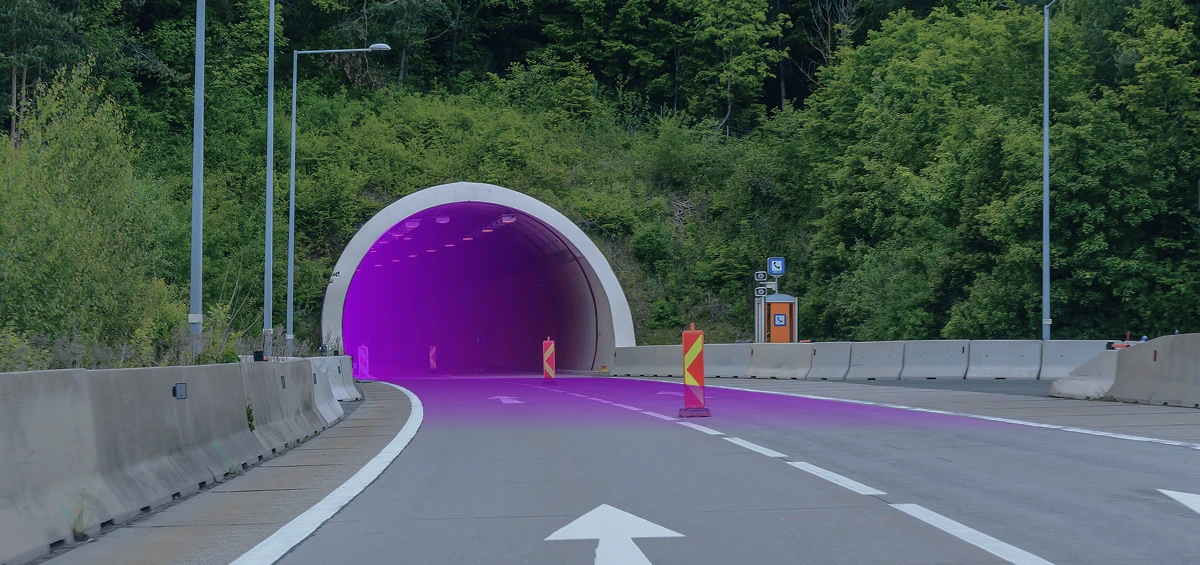

Many drivers know the moment: you enter a tunnel on a bright day, the road ahead suddenly goes dark, and it can take a moment for the eyes to adjust. Camera-based perception systems can face a similar challenge. At a tunnel entrance, bright daylight and a much darker interior appear in the same image, which can make it harder to keep important details visible.
Mobileye technology is designed to help preserve meaningful visual details rather than adjust the whole image in the same way.
This is intended to support more consistent perception through the transition from outside to inside the tunnel, helping the system maintain visibility of the road ahead.
Why conventional processing can lose important detail
Adjusting the brightness of an image can sometimes contribute to a loss of visual information.
In some cases, conventional tone mapping applies the same adjustment across the whole image to help make details more visible in scenes with a large difference between bright and dark areas, such as a tunnel entrance. However, because the same adjustment also has to handle the bright daylight outside, it can reduce contrast in darker regions, making an object inside the tunnel harder to distinguish from its surroundings.
For example, as a car enters a tunnel, its perception system may have trouble distinguishing a stationary vehicle in an unlit section ahead, because the vehicle blends into the dark background.
The Mobileye approach to local tone mapping
Mobileye’s local tone-mapping approach is content-aware. When an area of interest is identified within an image, the system can adapt the tone mapping applied to that region, helping preserve important visual details.
At a tunnel entrance, a specialized detection algorithm identifies the tunnel region, including its location and boundaries. The tone-mapping algorithm then adjusts how that region is processed to help preserve contrast and detail within the darker area.
By processing different areas of the image according to their specific lighting conditions, this approach aims to support the detection and tracking of vehicles, pedestrians, and other obstacles against the dark tunnel background.
For automakers, this matters because perception systems are expected to perform across the wide range of lighting conditions encountered every day. Retaining useful visual information when moving between bright sunlight, shadows, tunnels, and other high-contrast environments can help support the overall performance of driver-assistance systems.
Supporting evolving requirements
Automakers and regulators are placing growing focus on how driver-assistance systems perform in challenging conditions, including complex lighting scenarios such as tunnel entrances. Some emerging regulatory requirements may consider, for example, whether a system can detect a vehicle in this scenario, as it moves from daylight into the darker interior.
Scenarios like this highlight why keeping detail visible through sudden lighting changes matters. It is the kind of challenge content-aware tone mapping is designed to help address.
At a tunnel entrance, even a small difference in contrast can affect whether a person or object is visible to the perception system.
By adapting tone mapping to the content of each scene, Mobileye’s approach is designed to help preserve relevant details as lighting conditions change rapidly. Addressing challenges like these is an important part of building robust perception that can help support OEM requirements for today’s driver-assistance systems and the path toward autonomous driving.


