
blog
|
February 04, 2026
The era of scalable premium-level, hands-off driving
Discover how Mobileye Surround ADAS™ is a cost-efficient and scalable ADAS platform that makes premium hands-off driving accessible across mass-market vehicles.



Made for reduced hardware overhead, simplified software integration, and overall system architecture.
Advanced ADAS capabilities have proliferated across vehicle segments, with an increasing number of modern vehicles falling under the eyes-on, hands-off category. But as these technologies reach maturity, industry focus shifts away from individual feature enhancement. Instead, it moves toward feature consolidation and the development of advanced, cohesive, and affordable premium ADAS systems that are ready for production.
With two major automaker wins, Mobileye Surround ADAS™ is entering a new phase. This progress signals a clear path toward broader industry adoption worldwide.
From standalone ADAS features to scalable integrated platforms
It’s clear that ADAS has moved beyond early adoption and into a mature phase. In fact, a recent study revealed that hands-off, driver-supervised highway driving is the single most wanted vehicle feature, desired by 43% of new-vehicle intenders.
New cars today have capabilities that range from more basic ADAS features such as automatic emergency braking and lane-keeping assist to more advanced features like assisted lane change, and among premium vehicles, hands-off driving on select highways.
With the provision of some features moving toward standard fitment, the challenge lies in how they come together to ensure low latency across inter-ECU communication, reliable operation in fragmented environments, and the abilty to meet increasingly high validation pressures.
The consolidation of parking for cost efficiency
In a software defined era, there’s a concerted effort to minimize ECUs where possible, pushing automakers to re-evaluate their core architectures to reduce costs, wiring and integration. But too much consolidation can potentially introduce risk and dramatically reshape existing architectures. So where is the balance? Where can automakers consolidate and reduce hardware and software cost in the most effective way? One answer lies in the parking application.
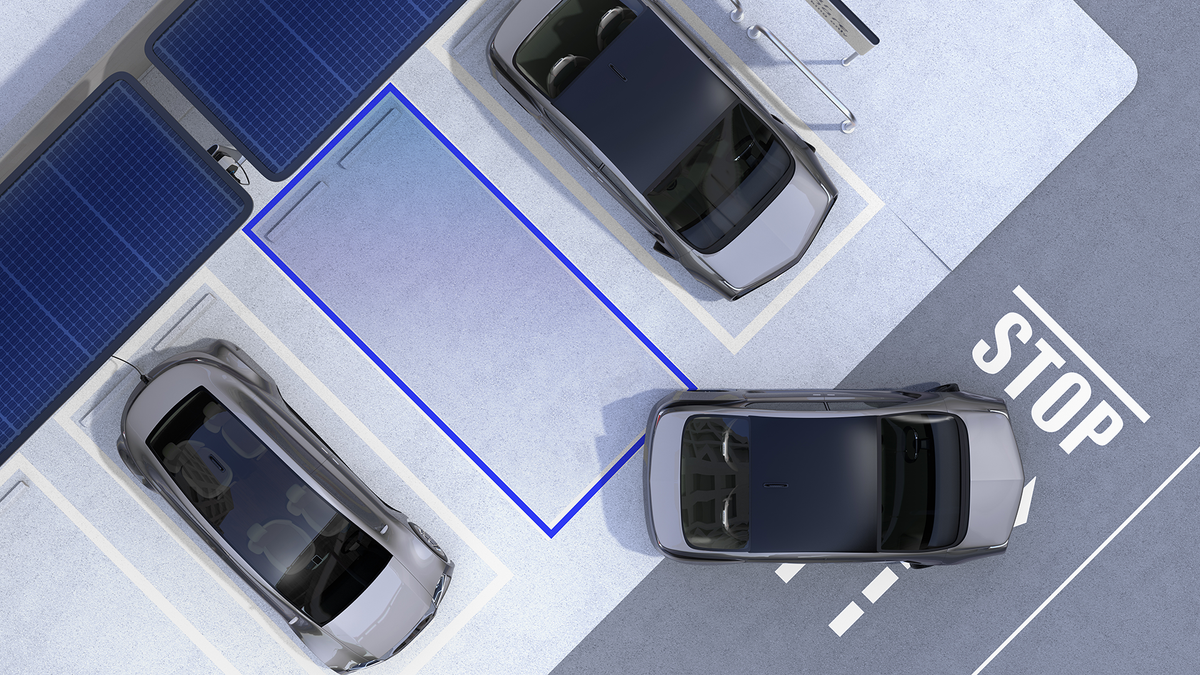
Historically, parking and ADAS have run on separate ECUs, existing in silos within the same vehicle. Yet because both systems rely on the same sensors, maintaining duplicate data paths becomes an unnecessary cost. That model is now changing. In a recent Mobileye production program, ADAS and parking have now been consolidated to run on a single EyeQ6H within one ECU.
This setup leverages the same available sensors for both applications and removes the use for an extra dedicated parking ECU, thus reducing hardware costs and increasing system simplicity. Through this architecture, automakers can deliver richer functionality without adding costs. Consolidating parking is therefore less about adding capability and more about making the economics of a unified L2 platform work.
Pairing driver monitoring systems with ADAS
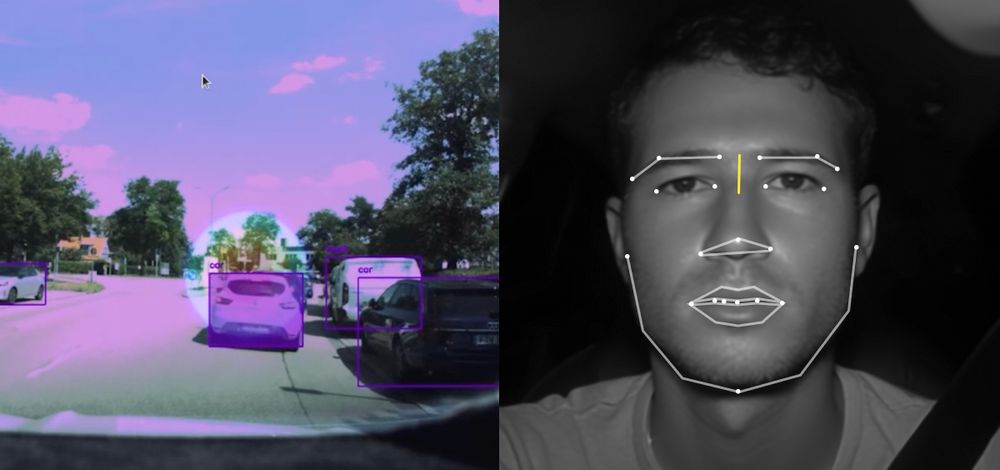
Another efficient consolidation opportunity comes from pairing ADAS and Driver Monitor System (DMS). In the Mobileye Surround ADAS platform, the Mobileye DMS™ works directly alongside the ADAS stack, allowing both systems to operate in concert. By leveraging the vehicle’s external sensing system, Mobileye’s DMS is designed to eliminate the need for a separate processor, reducing cost and supporting broader SoC and ECU consolidation goals.
This integration is not just about hardware savings. Running ADAS and DMS together on a single chip also enables tighter coordination between internal and external sensing, allowing the system to function more cohesively and respond more intelligently in real time.
By cross-referencing the driver's gaze with real-time road conditions captured by the external ADAS cameras, the system is designed to assess the driver more accurately and respond more intelligently. The result is lower latency and tighter coupling than would be possible if ADAS and DMS were running on separate ECUs communicating over a vehicle network,.
This integration supports highway hands-off/eyes-on driving in designated areas while reducing redundancy and simplifying system validation. It also reinforces a broader industry trend: hands-off driving is no longer built from loosely connected subsystems, but from unified platforms.
Why two big automakers have decided that Surround is the new standard for ADAS
With automakers increasingly concerned with building architectures designed for scale, Surround ADAS responds directly to these design needs. Now, with two major global automakers adopting Surround ADAS, the solution is becoming a reference architecture of the industry, demonstrating that the move is not merely a point, but a vector in a new direction.
Through the Surround ADAS solution, that leverages the latest advances in AI, automakers can meet consumer and industry demands with far more simplicity and bring advanced and scalable ADAS technology to vehicles across different segments, on a mass-market scale.
*Above specifications may be modified and updated by Mobileye.
Share article
Related News
Press Contacts
Contact our PR team


