
blog
|
August 11, 2026
Hands-off driving goes mainstream: enabling L2+ at scale
Hands-off driving is no longer a premium-only feature. With the right architecture, hands-off driving can scale across vehicle programs, and Mobileye's integrated platform is built to make that happen.


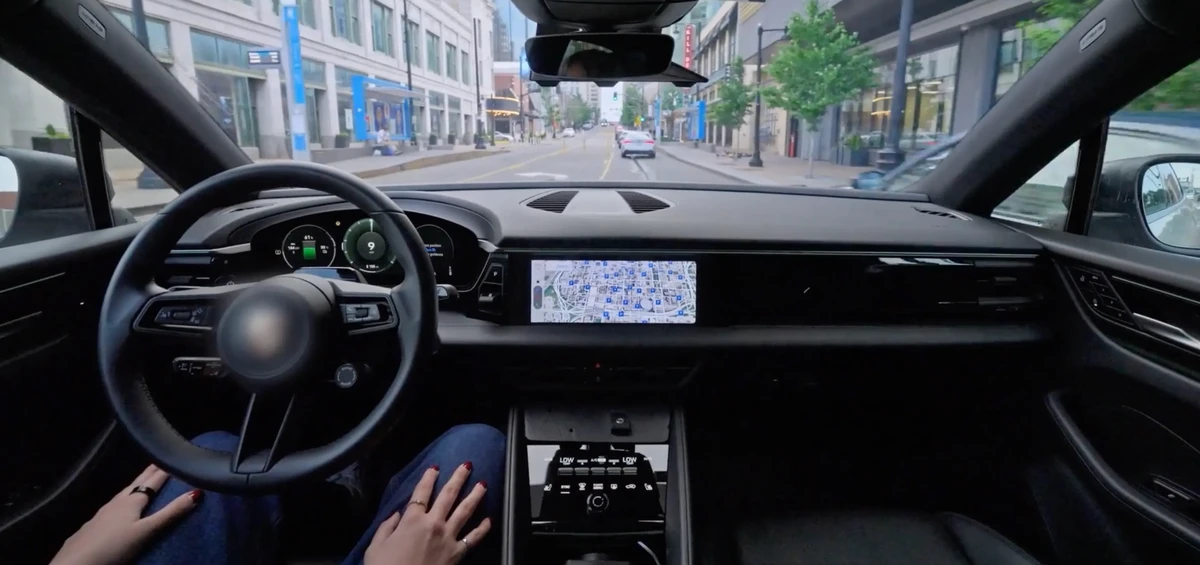
ADAS begins to move toward ADES: advanced driver experience systems.
Advanced driver assistance systems have reached an inflection point. What started as isolated features that improved moments along the journey has become a more unified set of Level 2 driving capabilities that are reshaping the driving experience itself.
No longer is this about lane keeping or merging alone. It's about the new in-vehicle experience, where ADAS begins to move toward ADES: advanced driver experience systems.
What is the L2+ experience?
L2+ is an advanced level of ADAS, or ADES, that is about adding a smoother, more comfortable and autonomy-focused driving experience, while the driver‘s eyes always remain on the road.
But the L2+ experience cannot be defined by one function. Rather, it is created through a combination of capabilities, such as hands-off highway driving, automatic lane change, parking applications, visualization, and driver monitoring, all integrated into a single system that supports the driver across the journey and across a growing range of ODDs (operational design domains).
Why is the demand for L2+ experience growing?
With every new vehicle model on the road today, consumers are becoming increasingly accustomed to greater comfort, smoothness, and richer digital experiences in the car. Infotainment systems, screens, software-based features, and connected services are now a central part of the driving experience.
As a result, drivers are no longer evaluating ADAS only by whether a feature exists. They are judging how it feels.
At the same time, automotive architecture is transforming rapidly. Vehicles are becoming more centralized, with greater compute capacity and more room for software-defined feature growth.
This shift allows automakers to bring more advanced capabilities into more vehicle programs, not only limited premium models.
AI is also accelerating what is possible. With the rise of robotaxis and more advanced autonomy programs, the industry can see that higher levels of automation are no longer theoretical. The challenge is how to bring these capabilities into production vehicles in a way that is safe, scalable, and cost-efficient.
How does Mobileye make L2+ possible?
Making hands-off driving more possible requires more than one feature. It is a set of technologies working together, from compute and mapping to driver monitoring and the in-vehicle experience.
EyeQ™ 6 High System on Chip (SoC): At the center is Mobileye EyeQ6 High, a purpose-built SoC that brings five distinct architectures into a single chip. It supports Mobileye’s compound AI approach, combining multiple algorithms with end-to-end AI system.
Mobileye REM™: REM helps make hands-off possible at scale by turning real-world driving data from millions of vehicles into fresh road intelligence. This supports localization and advanced driving functions across the ADAS to AV spectrum. Today, REM is powered by more than 8 million active harvesting vehicles, with over 34 billion miles harvested in 2025.
Parking and visualization: L2+ is not only about highway driving. The system can support transitions from hands-off driving into advanced parking applications and back again, while visualization helps show the driver what the vehicle understands and how it responds.
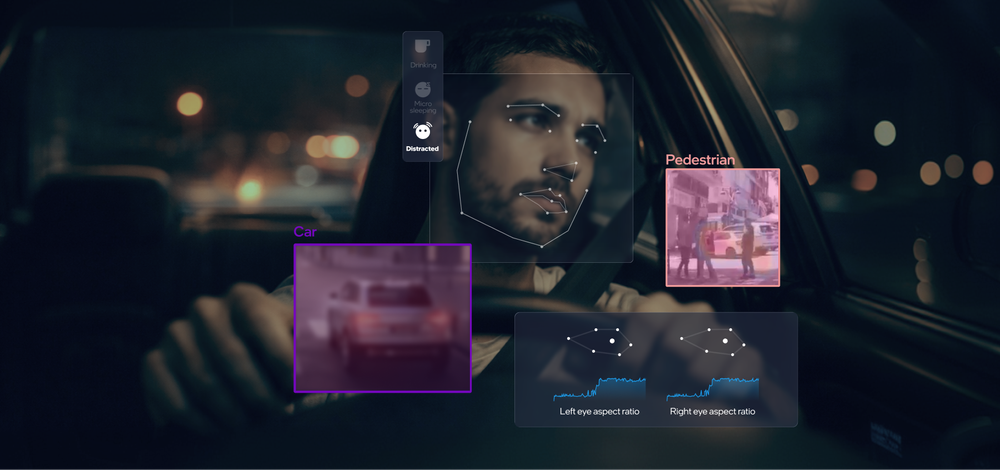
Mobileye Driver Monitoring System™: Driver monitoring goes beyond checking attention. By combining where the driver is looking with what the external sensors detect, Mobileye DMS can create more context-based alerts that support both safety and comfort.
Driving functions: A major focus is on driving capabilities geared for advanced ADAS and autonomous capability that support functions such as hands-off driving, automatic lane changes, and highways (on- and off-ramp navigation.)
*Availability and performance is subject to a number of factors, including product and vehicle specification, manual, ODD and law. Driver to be engaged and ready for takeover.
The feedback loop that powers the autonomy stack
Lastly, one of the main factors behind the growing strength of premium ADAS comes down to Mobileye's work across a broad spectrum, from basic ADAS to premium driver assistance, consumer AVs, and robotaxi technologies.
That breadth creates an important feedback loop: lessons from advanced autonomy help shape ADAS development, while insights from large-scale ADAS deployment inform the path toward higher levels of autonomy.
A system that performs well in a controlled environment still needs to meet the demands of cost, reliability, validation, regulation, user experience, and automaker integration. At Mobileye, the goal is to meet these demands in order to deliver a safe, scalable, and comfortable driving experience for all.
Share article
Related News
Press Contacts
Contact our PR team


