
blog
|
September 01, 2025
From pilot testing to auto-pilot – Driven by Mobileye™
How first-generation Mobileye Drive™ paves the path towards the next generation of fully scalable autonomous deployment.


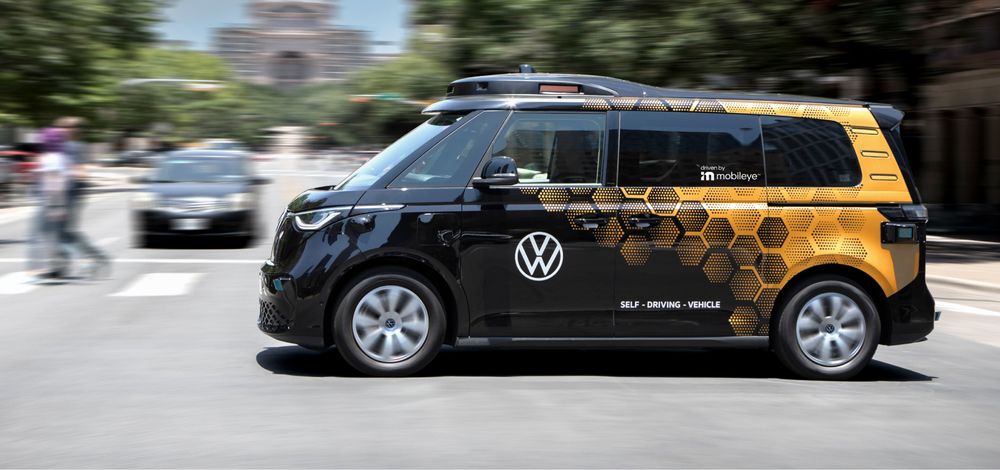
VW ID Buzz.
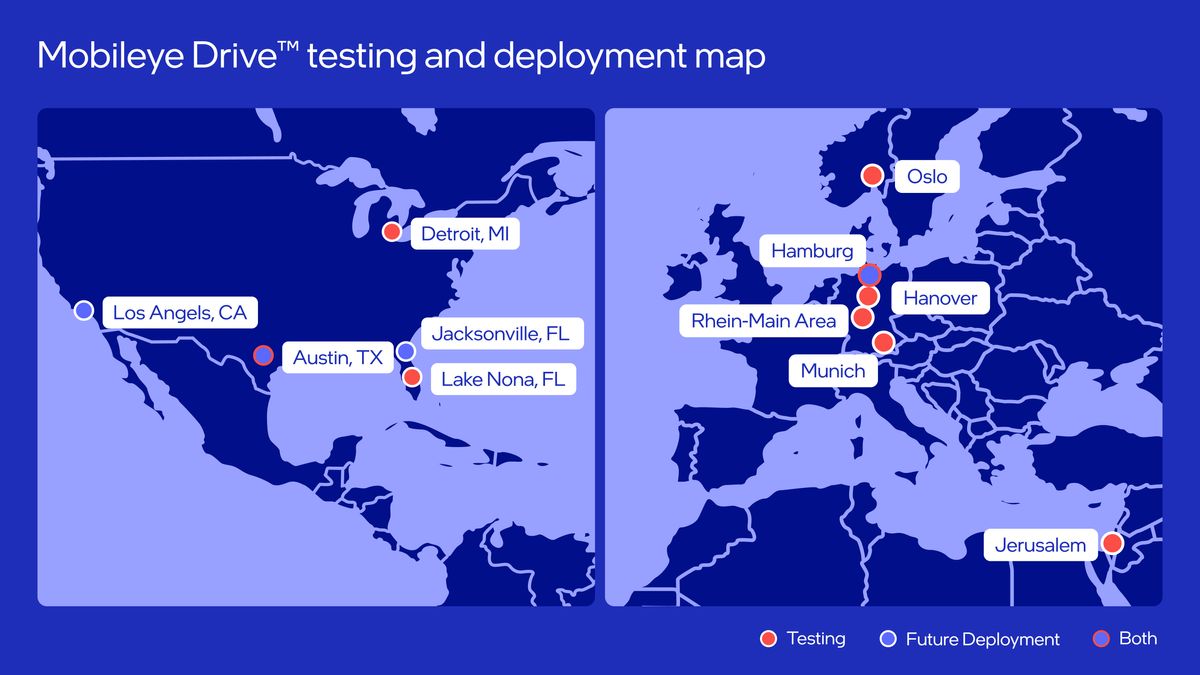
Autonomous mobility is no longer a futuristic vision, it's an evolving reality, steadily gaining traction in cities across the globe. At Mobileye, we believe in solving the hard parts first so we can hit the ground running when it comes to deployment at scale. Thanks to Mobileye’s strategic ecosystem approach, which calls for collaboration with vehicle makers, fleet operators, and on-demand-service providers, Driven by Mobileye™ vehicles are already traveling in certain locations in Europe and North America, running pilots for the benefit of the complete ecosystem. Designed to enable autonomous Mobility as a Service (MaaS) such as robotaxi, ride sharing and ride pooling projects, while paving the way for the more advanced second-generation solutions to take over.
First generation Mobileye Drive™ technology is being used for pilots in Norway, Germany, and the United States. They run limited services and features, offering ecosystem participants to dip their toes into MaaS. For example, six first generation-powered NIO vehicles with a safety operator run in the Grorud Valley outside of Oslo, and six more are outside of Frankfurt, Germany. These pilots give ecosystem participants a chance to learn new processes of using an on-demand shuttle and adjust their platforms and user experience. These development vehicles hold the first version of our tech stack, showcasing a redundant sensor suite consisting of a camera system and a radar and lidar system and Mobileye EyeQ™5 processors.
Building on these testing pilots, the next generation of Mobileye Drive technology is specifically optimized for use in mobility services and production at automotive scale. For example, the Mobileye Drive-powered VW ID.Buzz. relies on a newer Mobileye Drive ECU, leveraging four EyeQ™6H chips - our most powerful chip to date. With improved accuracy thanks to a more robust sensing suite including the Mobileye Imaging Radar™, optimized algorithms, and a transparent Compound AI approach, it’s designed to deliver a high-performance, scalable and cost-effective product. Beyond the more precise and robust sensing, the production Mobileye Drive tech stack unlocks several new approaches to autonomy, such as the Primary Guardian Fallback AI system our CEO Prof. Amnon Shasua and CTO Prof. Shai Shalev-Shwartz discussed during Mobileye Driving AI event.
Extensive deployment of autonomous MaaS services means mastering both the road and the service in every sense, it hinges on more than just innovation. It requires precision, safety and efficiency - at scale and by design, from being able to adapt to local driving culture all the way through to accounting for various edge cases on the driving side, as well as anticipating customer demands, building a user-friendly platform, and general vehicle maintenance. These are all aspects of multiple layers of operation that must be considered. That is why the first generation of Mobileye Drive technology is crucial for refining the next generation products that vehicle designers, fleet operators, and service providers can soon deliver on the full promise of autonomous driving.
Share article
Related News
Press Contacts
Contact our PR team


